
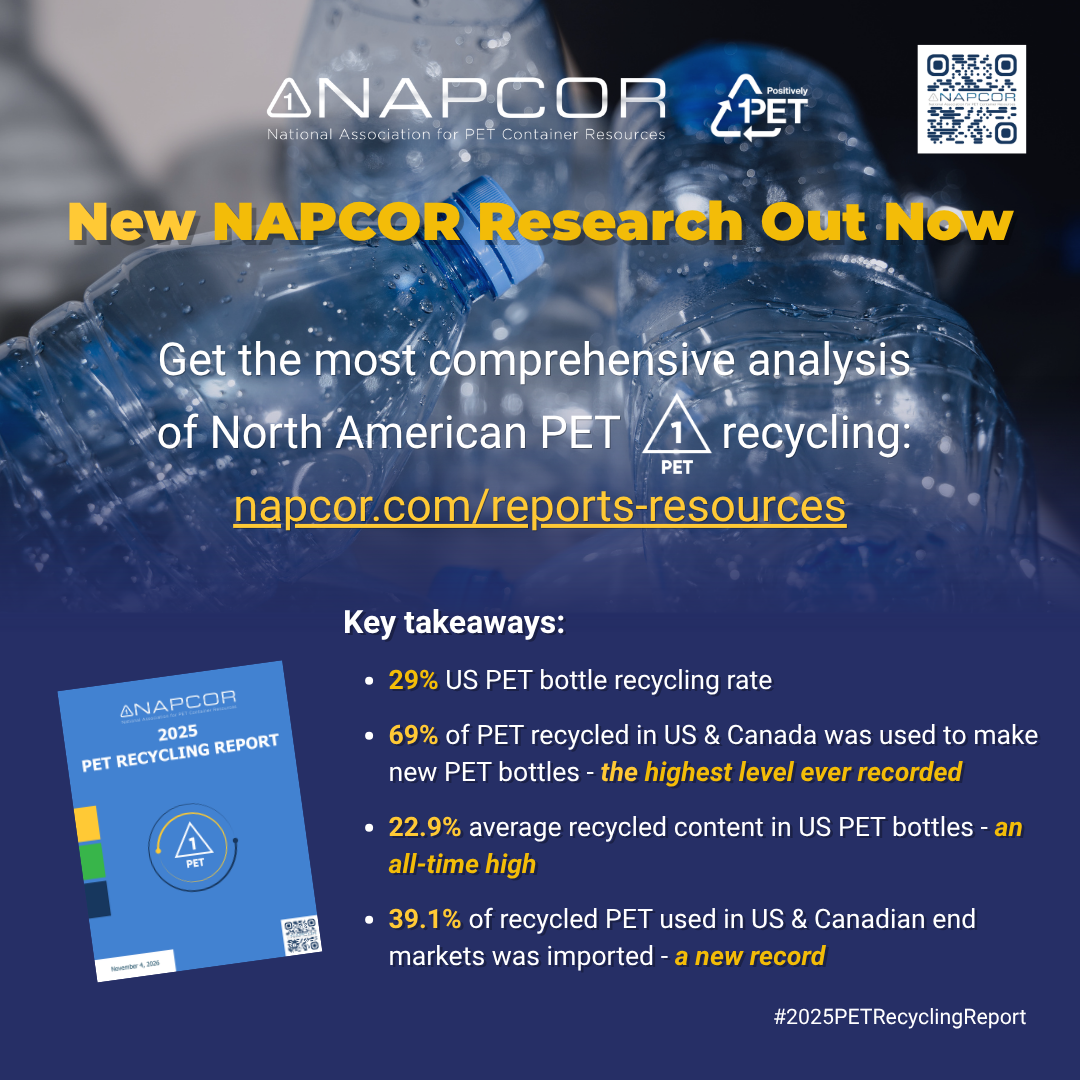
New data show growing demand for recycled polyethylene terephthalate (PET) plastic alongside declining US bottle collection and greater reliance on imports. The findings also point to a path forward: policymakers can help strengthen collection, recycling infrastructure, and American manufacturing.
PET, the fully recyclable plastic identified by the #1 inside the recycling triangle ♳, is made to be remade. That means we can rely on less virgin (new) PET and instead recycle used PET bottles and other PET packaging, turning that material into new products and strengthening the circular economy.
NAPCOR’s new research, the 2025 PET Recycling Report, shows both the opportunity and the challenge: companies are using more recycled PET, while fewer US bottles are being collected and domestic recycling capacity faces economic pressure.
Fast facts: What does the 2025 report show?
- The US PET bottle recycling rate fell to 29.0% in 2025, down from 30.2% in 2024.
- The amount of US PET bottles collected fell 3.6%, to 1.821 billion pounds, even as bottles available for recycling increased slightly.
- Average recycled PET content in US bottles reached a record 22.9%.
- 39.1% of recycled PET used in US and Canadian markets came from imports, a record share. Pounds sold from US and Canadian reclaimers to these markets were 12% lower in 2025 compared to the 2021 peak.
- US and Canadian reclaimers processed a record 226 million pounds of PET thermoforms. Total thermoform collection, including exports, was 247 million pounds, down from 264 million in 2024.
The data show why growing demand alone cannot strengthen a circular economy. More recycled PET is going into bottles, but imports supply a growing share of the recycled material used in North American markets, while the US is collecting fewer bottles and selling fewer pounds of recycled content.
Why do recycled PET imports matter for US circularity?
A circular economy depends on collecting used materials, processing them, and using them again. For PET packaging, strong domestic collection and recycling ensure that PET is accepted in virtually all recycling programs, help keep material in regional supply chains to maximize environmental benefits, and provide manufacturers with recycled feedstock.
As imports account for more of the recycled PET supply, domestic recyclers face tougher conditions to sustain and expand their operations. NAPCOR has previously covered closures and challenges facing the US PET recycling system, as well as the market pressures affecting domestic reclaimers. We have also explored the broader realities facing PET recycling.
The 2025 report’s results reflect conditions across the value chain, including collection, processing capacity, and market demand. They raise a practical policy question: with the system showing signs of strain, how can communities and businesses rely on a reliable system to collect and recycle more PET?
What policies can strengthen PET recycling and American manufacturing?
Policy must catch up with recycling ambitions. Consumer education and recycling participation matter, but they cannot, on their own, make recycling convenient and accessible, support facility investment, or create predictable markets for recycled materials.
Policymakers can help strengthen the US PET recycling system in four ways:
- Expand and harmonize extended producer responsibility (EPR) programs.
Well-designed EPR programs can fund improvements to collection, sorting, and recycling. Greater consistency across state programs can reduce complexity and help businesses plan and invest with more confidence. - Expand deposit return systems (DRS) for beverage containers.
DRS, also known as bottle bills or recycling refund programs, have been shown to boost bottle collection and provide a dependable, high-quality supply of material for recycling. Expanding the number and scope of these programs can support more bottle-to-bottle recycling. - Modernize recycling infrastructure.
Investing in collection systems, material recovery facilities, and domestic recycling capacity can help recover more PET and process it more efficiently into high-quality recycled resin for US manufacturers. - Encourage domestic investment and stronger end markets.
Federal grants, loans, and tax incentives can help attract investment in US recycling infrastructure and manufacturing. Policies that support reliable demand for domestically recycled PET can strengthen regional supply chains and make markets more predictable.
These steps can help address the conditions behind declining collection, facility closures, and consumer skepticism. The fact is, nothing changes if nothing changes. Reversing these trends will require policies that support collection and recycling across the value chain.
What does the report mean for PET recycling?
PET is the most recycled plastic in the world, and new PET packaging can be made with up to 100% recycled PET. The report shows progress in recycled content and thermoform reclamation, alongside a clear need to strengthen US systems for collecting and recycling material.
With sustained investment and effective policies, the US can recover more PET, support American manufacturing, and keep more valuable material in circulation.
Read more: NAPCOR’s 2025 PET Recycling Report press release
Questions and answers
Did recycled PET demand decline in 2025?
No. Total recycled PET sales to US and Canadian end markets increased 5.6%. The growth came entirely from imports.
Why is domestic recycling capacity important?
Domestic facilities process collected PET into recycled material that manufacturers can use. Without strong demand for domestically recycled PET, upstream market impacts may eventually threaten access to recycling. Strong local capacity supports reliable supply chains and American manufacturing. When post-consumer PET is used in new products close to where it was collected and recycled, transportation impacts are minimized, enabling the full environmental benefits of using recycled PET.
Which policies could help increase PET recycling?
Harmonized EPR programs, expanded deposit return systems, and incentives for domestic recycling infrastructure can support collection, investment, and more predictable markets.
Keep your PET knowledge flowing.
Subscribe to the Positively PET blog for updates on PET recycling, sustainability, safety, and circular economy solutions. On desktop, look to your right. On mobile, scroll down for the subscription box.