
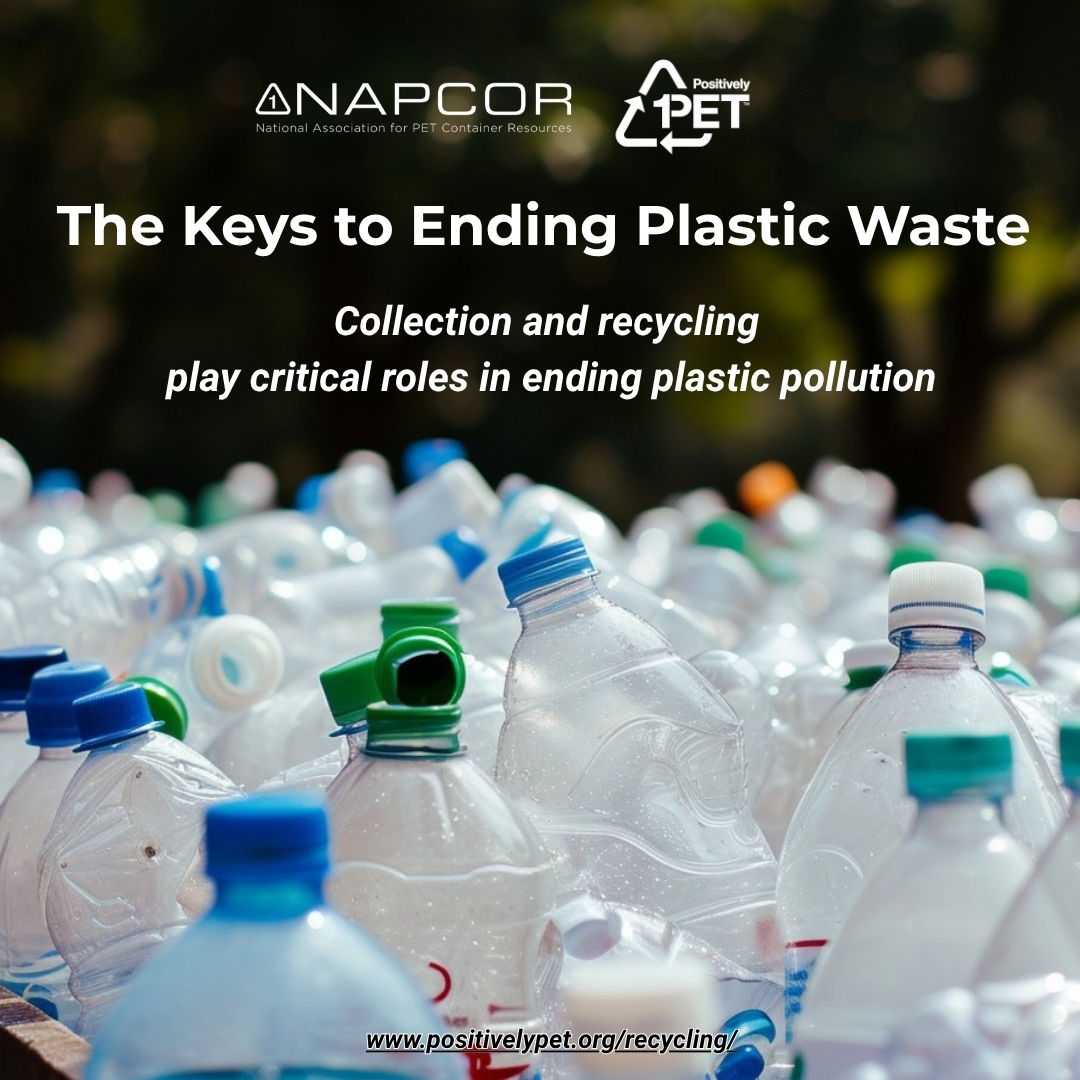
The most effective way to reduce plastic waste is to ensure that recyclable materials like PET (polyethylene terephthalate) plastic are kept in circulation.
Recycling policy has been increasingly making headlines across the country as states implement new extended producer responsibility (EPR) programs and explore other avenues to increase the collection of recyclable materials. Along with widespread interest in eliminating environmental pollution, policy changes represent an important shift in how the US approaches waste reduction. Rather than eliminating valuable packaging materials, policymakers should increasingly focus on building better systems to collect, recycle, and reuse them.
For PET plastic, that is especially important.
PET, identified by the #1 resin code, is the most recycled plastic in the world and one of the most widely accepted materials in US recycling programs. PET bottles and containers are designed to be recycled and remade, making them an essential part of a growing circular economy.
PET plastic is proven to be recyclable. The focus now needs to be on ensuring every PET bottle is recovered and makes it into that system.
Fast Facts About PET Plastic
- PET (look for the #1 in the triangle) is the most recycled plastic in the world.
- Most Americans can recycle PET bottles and containers through their local recycling program.
- PET bottles are made to be remade.
- Recovering more PET bottles helps support US manufacturing, creates jobs, conserves valuable materials, and strengthens the circular economy.
While PET bottles are entirely recyclable, many of them never make it to the recycling system. That’s why collection policies matter.
How Can Policy Reduce Plastic Waste?
Millions of PET bottles and containers are still lost to landfills each year, even though most Americans have access to recycling. Recovering more PET bottles is one of the fastest ways to reduce waste and strengthen the circular economy.
Across the country, policymakers are advancing legislation that recognizes the need for continued investment and modernization in recycling systems. At NAPCOR, we support well-designed policies that improve the collection of recyclable materials and help keep valuable PET in circulation. Several proven and promising approaches stand out:
- Extended producer responsibility (EPR) programs create sustainable funding for collection, sorting, and recycling infrastructure while bringing producers, governments, and recyclers together to improve system performance. When thoughtfully designed and implemented, EPR can increase the recovery of recyclable materials, improve access to recycling, and help build a stronger circular economy. As a case study, British Columbia has one of North America’s most successful EPR programs, which consistently drives recovery and recycling rates over 75% while saving municipal taxpayers millions of dollars.
- Deposit Return Systems (DRS), also known as bottle bills or recycling refunds, place a refundable value on beverage containers, creating a powerful incentive for consumers to return bottles for recycling. In fact, nine of the 10 states with the highest recycling rates have deposit return systems. These systems consistently deliver some of the highest collection rates in the world, producing cleaner streams of PET that can be recycled into new bottles and other products.
- Infrastructure and investment in recycling programs can help communities modernize recycling systems, expand access, and make better decisions using reliable national data. NAPCOR supports several federal proposals that aim to do just that, including the bipartisan Cultivating Investment in Recycling and Circular Local Economies (CIRCLE) Act, which would establish a tax credit to encourage investment in recycling infrastructure. NAPCOR also supports the Strategies To Eliminate Waste and Accelerate Recycling Development (STEWARD) Act, and the Recycling Infrastructure and Accessibility Act (RIAA) and Recycling and Composting Accountability (RCAA) Act, which would expand recycling access in underserved communities and improve the data needed to guide recycling policy and investment.
Together, these approaches can provide sustainable funding, create incentives for collection, expand recycling access, and build the infrastructure and systems needed to transform more PET bottles into new packaging instead of becoming waste.
Why Should Policymakers Invest in PET Recycling?
Well-designed recycling policies do more than reduce waste; they help strengthen the US economy. Recovering more PET bottles supports domestic manufacturing, creates demand for American recycling infrastructure, and provides a reliable supply of recycled material for companies that make new packaging and products.
As demand for recycled PET continues to grow, policies that improve collection and recycling can help keep valuable materials in circulation, reduce reliance on imported recycled resin, and support jobs throughout the recycling and manufacturing value chain.
What Can Consumers Do to Improve Plastic Recycling?
In short: learn about and advocate for PET, and always recycle the #1.
As conversations around packaging continue to evolve, it is important that decisions are grounded in science and facts. Educating policymakers about the value of PET and the importance of investing in collection systems can inspire meaningful outcomes. At the same time, helping consumers understand what belongs in the recycling bin and encouraging them to always recycle their #1 PET bottles and containers ensures more valuable material stays in the circular economy.
When effective policies are paired with informed consumers, recycling systems work better for everyone.
What’s Next for PET Recycling?
The future of the circular economy depends on recyclable materials like PET. As state, federal, and global policymakers consider policies to address plastic pollution, the priority needs to be strengthening collection systems and promoting education.
The solutions already exist. By investing in stronger collection systems, educating consumers, and supporting policies that keep valuable PET in circulation, we can reduce waste, strengthen US manufacturing, and build a more resilient circular economy.
Explore NAPCOR’s advocacy around ending plastic pollution and read our article in POLITICO for more about how to end plastic waste: https://www.politico.com/sponsored/2024/11/three-steps-to-help-end-plastic-waste/
Frequently Asked Questions
Why is PET plastic considered recyclable?
PET (#1 resin identification code) is designed to be collected, processed, and remade into new products, including new bottles and containers.
Is PET the same as other plastics?
No. PET is unique because it is widely accepted in recycling programs and is designed to be recycled and remade into new products. Looking for the #1 resin code is one of the easiest ways to identify PET packaging.
What is the best way to reduce plastic waste?
One of the most effective ways is to improve collection systems so recyclable materials like PET are recovered, instead of ending up in landfills.
What is extended producer responsibility (EPR)?
EPR programs help fund recycling systems by making producers responsible for financing collection, sorting, and recycling infrastructure.
What is a deposit return system (DRS)?
DRS, aka bottle bills or recycling refunds, adds a refundable deposit to beverage containers, incentivizing consumers to return bottles for recycling.
Why should policymakers support PET recycling?
Investments in collection systems help recover more valuable material, strengthen domestic manufacturing, improve recycling rates, and reduce waste.
Can PET bottles become new bottles?
Yes. PET bottles are designed to be recycled and remade into new products, including new food-grade bottles.
Keep up with the latest recycling insights.
Subscribe to the Positively PET blog for updates on PET recycling, sustainability, safety, and circular economy solutions. On desktop, look to your right. On mobile, scroll down for the subscription box.