
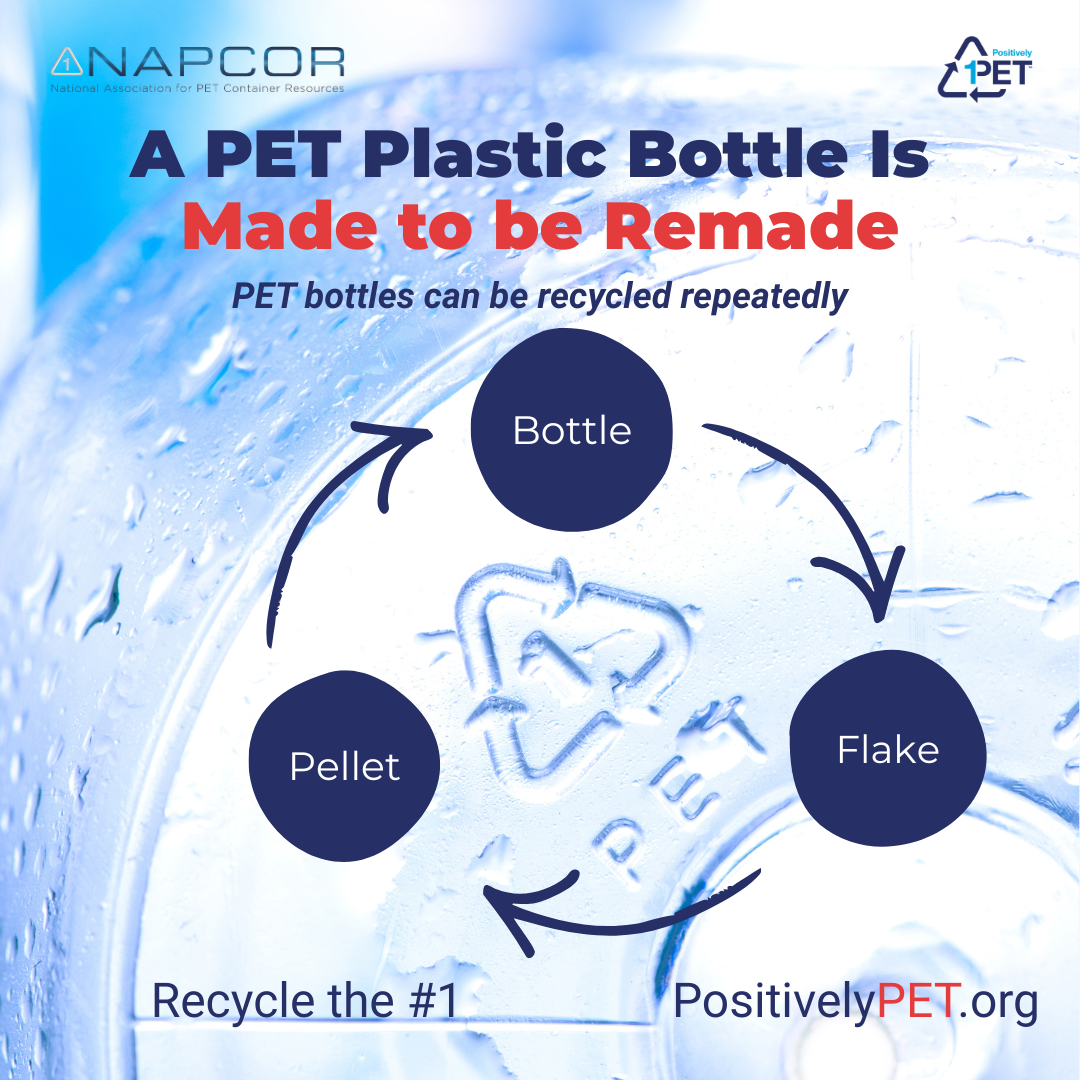
Short Answer: A PET plastic bottle can be recycled over and over again. While small changes can occur in recycled PET after repeated heating during recycling, modern recycling processes can address them, allowing the material to be used again in new bottles and packaging.
A Material Designed for Circularity
When you place a plastic bottle in the recycling bin, you might wonder: What happens next? And perhaps more importantly, can that bottle really be recycled again and again?
For PET plastic bottles—the bottles identified by the #1 inside the recycling triangle—the answer is yes.
PET (polyethylene terephthalate) is designed to be part of a circular system in which materials are collected, recycled, and remade into new products, including new bottles.
In fact, PET is the most recycled plastic in the world, thanks in part to its durability and ultimate recyclability. PET bottles can be processed and reused multiple times.
Scientific research examining PET bottle-to-bottle recycling confirms this capability. The research concludes that PET can continue to be recycled and reused effectively in packaging applications when proper recycling processes are applied. You can read the study here: Circularity Study on PET Bottle-To-Bottle Recycling.
So what actually happens when a PET bottle is recycled?
What Happens When PET Is Recycled?
When PET bottles are recycled, they go through several steps:
- Collection through recycling programs
- Sorting at recycling facilities
- Cleaning and processing into small flakes
- Melting and reforming into pellets of recycled PET (often called rPET)
- Manufacturing new products using those pellets
These recycled pellets can then be used to produce:
- New beverage bottles
- Food packaging
- Clothing and textiles
- Carpeting
- Automotive materials
This process is often called “bottle-to-bottle recycling.”
Can PET Be Recycled Forever?
A common question is whether plastic bottles can be recycled endlessly. The short answer is yes.
Research shows that PET can be recycled repeatedly, including into new bottles.
Recycling PET isn’t theoretical. It’s happening every day.
Across North America, companies are already turning used PET bottles into new materials and packaging every day. Here are just some examples of how PET recycling works in practice:
- Amcor – Recycling facilities in Wytheville, Virginia, and Chino, California
- AMP – AI takes out the trash: Largest US recycling project extends landfill life for Virginia residents
- Eastman – Advanced recycling technologies for plastics
- Niagara Bottling – Bottle-to-bottle recycling for beverage packaging
- Novolex – Recycling and converting plastic into new packaging solutions
- Placon – Recycling PET into food packaging and thermoforms
- Plastic Ingenuity – Transforming post-consumer recycled plastic into products that touch everyday life
- Plastipak and CleanTech – Recycling more than 500 million pounds of material every year
- PolyQuest – Manufacturing PET resins used in packaging and other applications
Many of these companies have shared videos through PLASTICS’ Recycling is Real campaign showing how recycling works in real facilities, turning used PET packaging into new products and materials.
For example, here’s how Plastipak processes and remakes recycled PET:
What Happens After You Put Your Plastic Bottle in the Recycling Bin?
During recycling, the material is heated and reprocessed. Over multiple recycling cycles, some minor changes in the material can occur due to repeated heating histories.
However, these changes can be addressed during the recycling process, allowing the material to maintain the performance needed for new packaging.
If you’ve ever wondered what happens after you place a plastic bottle in the recycling bin, this short video shows the journey from recycling bin to new material:
Mechanical and Chemical Recycling
PET plastic can be recycled through mechanical recycling, in which bottles are cleaned, melted, and remade into new materials. Emerging technologies such as chemical recycling can also break PET down into its molecular building blocks to create new materials.
Both approaches help support a circular system for PET packaging.
Why This Matters for Recycling
The ability to recycle PET multiple times is one of the reasons it plays such an important role in modern recycling systems.
Every time a bottle is recycled:
- Valuable material stays in use and out of the environment
- Less raw material is needed
- Less waste goes to landfills
- The recycling system becomes more efficient
When consumers recycle PET bottles, they help keep these materials circulating in the economy.
Made to Be Remade
PET bottles are made to be remade, meaning bottles can be collected, processed, and turned back into new products, including new bottles, again and again.
The bottle you recycle today could become part of a new bottle tomorrow.
What You Can Do
You play an important role in the recycling system.
When you finish a beverage packaged in PET, remember to:
- Look for the #1 in the recycling triangle
- Empty the bottle
- Place it in the recycling bin
Each recycled bottle helps keep valuable materials in use and supports a more circular packaging system.
The Bottom Line
So, how many times can a plastic bottle be recycled? For PET plastic bottles, the answer is simple: They can be recycled over and over again.
With effective recycling systems and continued consumer participation, PET bottles can continue to be remade into new products, helping build a more circular future for packaging.
Frequently Asked Questions (FAQs)
Can PET bottles be recycled into new bottles?
Yes. PET bottles can be recycled into recycled PET (rPET), which can then be used to make new bottles and food packaging.
Does recycling damage PET plastic?
Minor changes can occur during repeated heating in recycling, but modern recycling processes mitigate these changes and maintain material performance.
What plastic bottles are easiest to recycle?
PET bottles, identified by the #1 in the recycling triangle, are widely recycled and commonly used in beverage packaging.
Ready for more?
Subscribe to the Positively PET blog for updates on PET recycling, sustainability, safety, and circular economy solutions.