
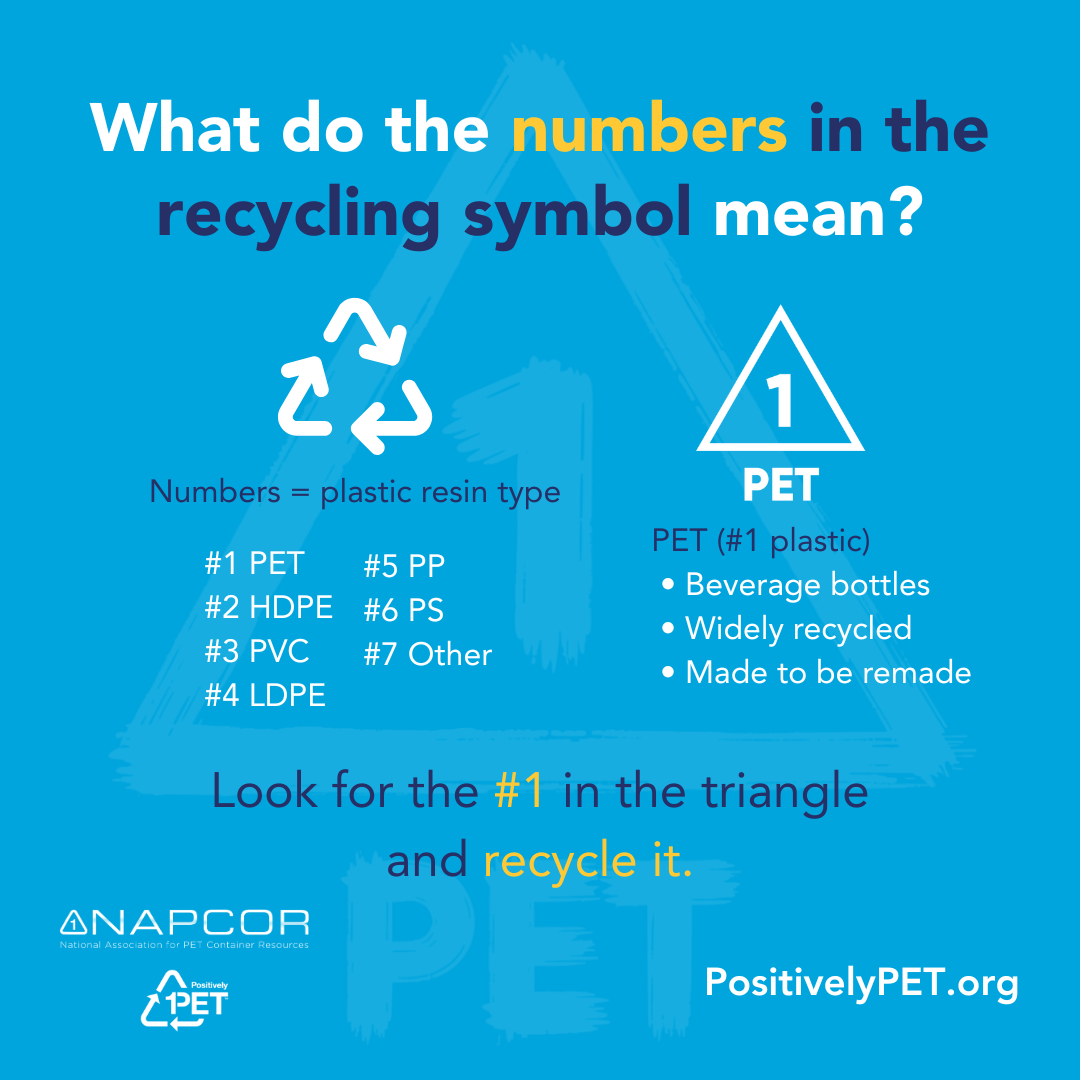
Short Answer: The “1” in the recycling symbol identifies PET (polyethylene terephthalate) plastic. The number is part of the resin identification code system, created in 1988, which helps recyclers identify and sort the seven types of plastic.
If you’ve ever looked closely at a plastic bottle or container, you’ve probably noticed a small triangle made of arrows with a number inside it.
But what does that number actually mean? Not all plastic is the same.
The number inside the triangle is called a resin identification code. It tells recyclers what type of plastic the item is made from and helps ensure it can be properly sorted and processed in recycling systems.
These codes were established by ASTM International beginning in 1988 to identify the type of plastic resin used to make packaging and other products. Today, the system includes seven types of plastic resins, each with vastly different properties, and each represented by a different number inside the triangle.
When you see a “1” inside the recycling triangle, it means the item is made from PET (polyethylene terephthalate) plastic. And that’s good news.
What Is PET Plastic?
PET is one of the most widely used packaging materials in the world. You’ll commonly find it in:
- Beverage bottles
- Water bottles
- Soft drink bottles
- Juice bottles
- Food containers
- Clear packaging like clamshells and trays
- Healthcare applications, such as heart valves, tubing, sutures, and medical device packaging
PET plastic is a popular packaging material because it is lightweight, durable, clear, and safe for food and beverage packaging.
PET has been extensively studied for more than five decades and is approved for safe for food contact by regulatory authorities worldwide, including the US Food and Drug Administration (FDA), Health Canada, and the European Food Safety Authority.
What Do the Numbers 1-7 on Plastic Mean?
The resin identification code system groups plastics into seven categories based on the type of resin used to make them. The codes help recycling facilities identify and sort materials more efficiently.
Here’s a quick guide to what the numbers mean:
| Number | Plastic Resin Type | Common Uses |
| #1 | PET (Polyethylene Terephthalate) | Beverage bottles, water bottles, food containers |
| #2 | HDPE (High-Density Polyethylene) | Milk jugs, detergent bottles, shampoo bottles |
| #3 | PVC (Polyvinyl Chloride) | Pipes, some packaging, some medical tubing |
| #4 | LDPE (Low-Density Polyethylene) | Plastic bags, squeeze bottles, film packaging |
| #5 | PP (Polypropylene) | Yogurt cups, food containers, some bottle caps |
| #6 | PS (Polystyrene) | Foam cups, food trays, packing materials |
| #7 | Miscellaneous other Plastics | Various plastics such as polycarbonate and bioplastics |
While each plastic serves different purposes, PET—universally recognized by the #1 inside the triangle—is widely used for food and beverage packaging and plays an important role in recycling systems.
In fact, PET is the most recycled plastic in the world.
Why the #1 Matters
The #1 resin code helps recycling systems recognize PET plastic so it can be collected, sorted, and remade into new products.
When consumers place PET bottles and containers in the recycling bin, those materials can be recovered and processed into new products such as:
- New bottles and containers
- Food packaging
- Clothing and textiles
- Carpeting
- Automotive materials
This ability to turn used packaging into new products is part of what makes PET plastic such an important material in a circular economy.
Made to Be Remade
One of PET’s biggest advantages is that it can be recycled and remade, again and again and again.
Across North America and around the world, recycling systems collect millions of PET bottles each year. Those bottles are sorted, cleaned, and processed into recycled PET, often called rPET, which manufacturers can use to make new packaging.
That means the bottle you recycle today could become part of a new bottle tomorrow.
What You Can Do
Recycling PET starts with consumers.
When you finish a beverage, food, or any product packaged in PET, take these three steps:
- Look for the #1 inside the triangle
- Empty the container
- Place it in the recycling bin
It’s as simple as that! When you recycle PET, you play a critical part in the circular economy. Every bottle recycled helps keep valuable materials in use in the economy and out of landfills and waterways, where they never belong.
The Bottom Line
That small “1” inside the recycling triangle carries an important message.
It tells you the item is made from PET plastic, a material that is widely recycled and designed to be part of a circular system.
So the next time you see the #1, remember: recycle it. Always #RecycleThe1!
Frequently Asked Questions (FAQs)
What does the number in the recycling symbol mean?
The number identifies the type of plastic resin used to make the product and helps recycling facilities sort materials.
What plastic is number 1?
Plastic #1 is PET (polyethylene terephthalate), commonly used for beverage bottles and food containers.
Is plastic #1 recyclable?
Yes. PET is widely recycled and can be remade into new bottles, packaging, textiles, and other products.
Want to learn more?
Subscribe to the Positively PET blog for updates on PET recycling, sustainability, safety, and circular economy solutions.