
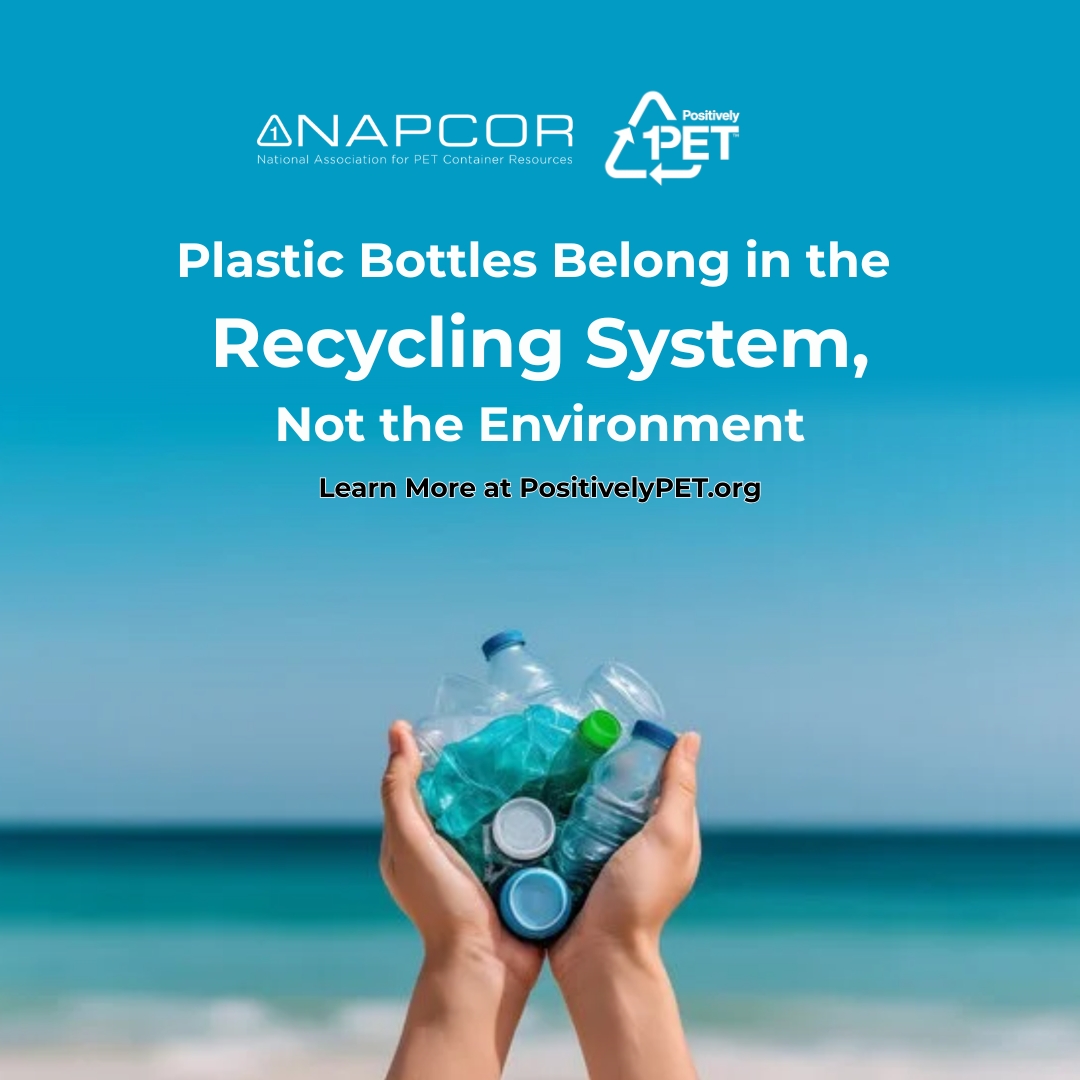
No plastic bottle belongs on a beach, in a river, or on the side of a road.
Ocean Conservancy’s latest International Coastal Cleanup findings underscore a problem that persists around the world: too many valuable materials are still being discarded or escaping collection systems and ending up in the environment. Plastic beverage bottles are among them. For PET bottles in particular, that represents not only an environmental problem, but a lost opportunity to recover and recycle a material with real economic value.
PET, or polyethylene terephthalate, is the plastic identified by the #1 inside the triangle and commonly used for water, soft drinks, and other beverage packaging. It is designed to be recyclable and has an established bottle-to-bottle recycling system operating today. When a PET bottle escapes that system, we lose an opportunity to turn it back into something useful.
That is why the conversation about plastic pollution needs to include collection.
Ocean Conservancy’s own research provides a compelling example. According to its United States of Plastics report, deposit return systems currently cover only about 27% of the US population. Yet those state-led programs account for more than 60% of all PET bottles recycled in the United States.
That tells us something important: when we make it easier and more valuable for consumers to return beverage containers, we collect more. We should be building on what works.
For PET, better collection does more than keep bottles out of the environment. It supplies recyclers with the material they need to operate. It gives manufacturers access to more domestic recycled PET. It supports jobs throughout the collection, recycling, and manufacturing value chain. And it keeps the economic value of that material circulating here in the United States rather than sending it to a landfill or losing it to the environment. That’s the definition of a circular economy.
Circularity matters at a time when demand for recycled PET remains strong and American recyclers need reliable supplies of material.
Well-designed deposit return systems and extended producer responsibility programs are a part of the solution. So is better recycling access, modernized sorting infrastructure, and clearer consumer education. The objective should be straightforward: capture more of the valuable material we already produce and get it back into the recycling system.
Ocean Conservancy’s findings should be a call to action: build collection systems that keep PET plastic bottles out of the environment and return them to productive use.
Policymakers can expand recycling access, invest in modern infrastructure, and advance well-designed deposit return and extended producer responsibility programs.
Consumers have a role, too: Recycle the #1.
PET bottles should never become litter. They should become the feedstock for what comes next, supporting American recyclers, manufacturers, and jobs along the way. We need these materials back in the system.
Learn how to recycle PET and keep valuable material in circulation: positivelypet.org/recycling/