
The Washington Post shows how technology, smart policy, and consumer participation can help more PET packaging get recycled
Do you really have to scrub every trace of peanut butter from a jar before recycling it?
(Answer: No. If the jar is made from PET—polyethylene terephthalate, the plastic identified by the #1 resin identification code—a quick scrape is generally enough. The container does not need to be spotless because it will be thoroughly washed later in the recycling process.)
That simple, relatable question opens the door to a much bigger conversation in a recent Washington Post Climate Coach article about how recycling works and what it will take to make the US system work better.
Reporter Michael J. Coren follows a PET peanut butter jar through the recycling process, from the moment it enters a materials recovery facility to the point when it is sorted, baled, washed, and prepared for its next life. Along the way, he offers a fascinating look at the machinery and technology behind modern recycling, including optical sensors that identify different materials and precisely timed bursts of air that sort more than 1,000 items per minute.
Read the Washington Post article: Here’s how your peanut butter jar — and nearly everything else — can be recycled
Fast Facts About PET Recycling
- PET is identified by the #1 inside the triangle and is commonly used for beverage bottles, food jars, and other packaging.
- PET is the most recycled plastic in the world, with well-established collection, processing, and end markets.
- The US PET bottle recycling rate reached 30.2% in 2024, while countries with strong collection systems routinely recover more than 80% of their PET beverage bottles.
- PET is made to be remade into new products, including new bottles, food containers, clothing, and carpet.
- PET containers do not need to be spotless before recycling. Empty the container, give it a quick scrape or rinse when necessary, replace the cap, and follow your local recycling guidelines.
How Technology Helps Recycle PET
As The Washington Post explains, modern recycling facilities rely on a combination of people, machinery, and increasingly sophisticated technology.
After workers remove items that do not belong in the recycling stream, a series of screens and separators divides flat materials, such as paper and cardboard, from three-dimensional containers. Optical sorters then use near-infrared light to detect the unique signature of each type of plastic. Once the equipment identifies a PET container, compressed-air nozzles direct it into the correct material stream.
The sorted PET is compressed into bales and sent to a PET reclaimer. There, the containers are thoroughly washed, ground into flakes, and processed into recycled PET, or rPET, that can be used to manufacture new products.
Optical sorting, computer vision, and artificial intelligence are making this process faster and more precise. These innovations can help facilities identify more materials, reduce contamination, and recover valuable packaging that might otherwise be lost.
But even the most advanced equipment needs recyclable material to reach it.
Recycling Requires More Than Technology
For more than 30 years, NAPCOR has researched PET recycling activity in the United States and North America. According to NAPCOR’s 2024 PET Recycling Report, the US PET bottle recycling rate reached 30.2% in 2024, exceeding the previous decade’s average of 29.5%.
Yet countries with more effective collection systems routinely recover more than 80% of their PET beverage bottles. Germany, one of the examples highlighted by The Washington Post, recycles nearly 90% of its #1 PET plastic bottles.
The difference is not whether PET can be recycled. It is whether communities have convenient and consistent collection, consumers participate, facilities have the infrastructure to sort and process the material, and strong markets exist for the recycled PET they produce.
Too many PET bottles and containers are still thrown in the trash because recycling access and participation vary widely across the country. Confusing local rules and inconsistent collection systems can make it harder for consumers to know what, and how, to recycle.
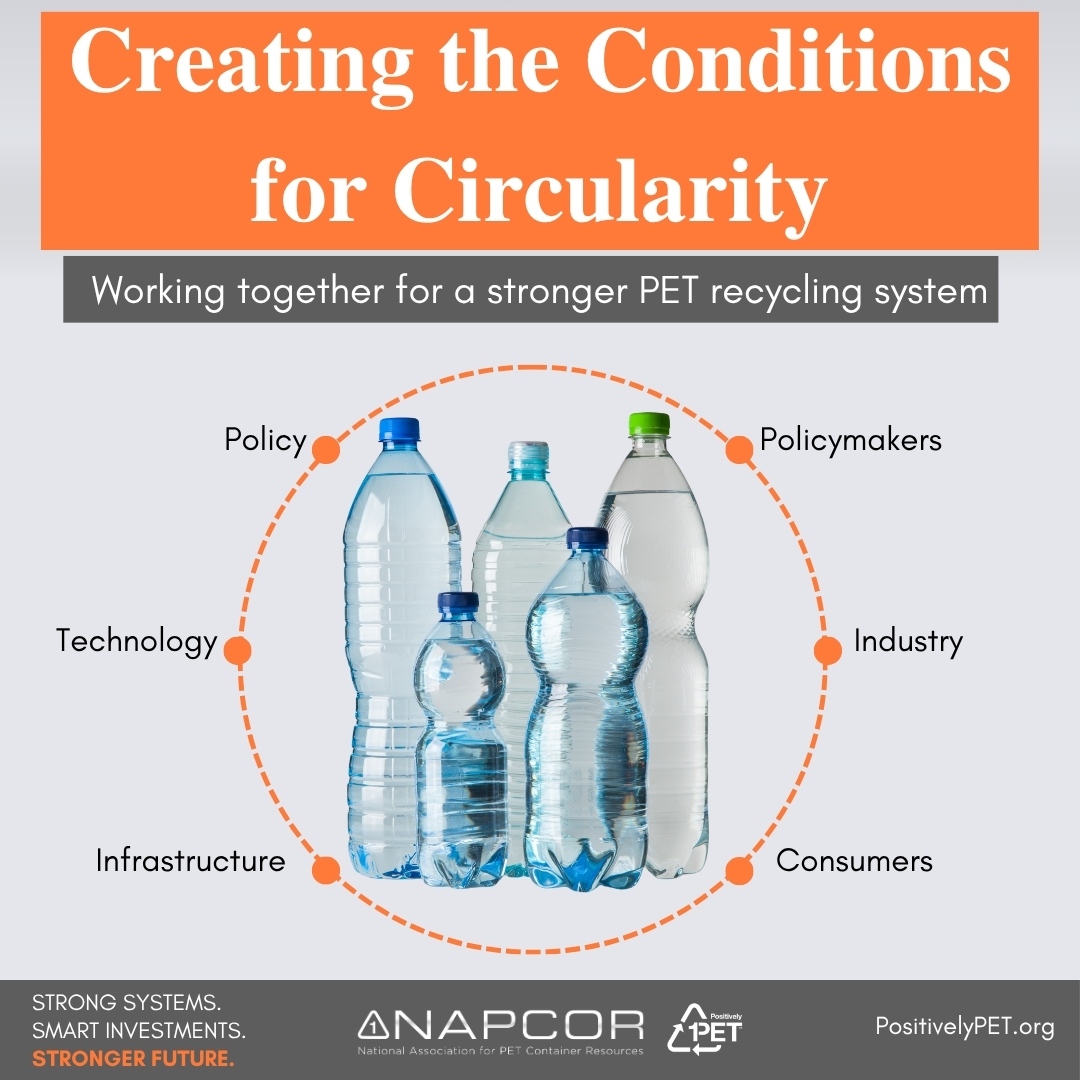
Technology must therefore be paired with stronger collection systems, continued infrastructure investment, clear consumer education, packaging designed for recyclability, and practical, evidence-based policies that create reliable demand for recycled materials.
A Better Recycling System Is Within Reach
The Washington Post article does not ignore the shortcomings of the current US recycling system. Instead, it demonstrates that those shortcomings are not inevitable.
PET is designed to be recycled and remade. The technology exists. The end markets exist. And examples from around the world show that dramatically higher recovery rates are achievable when effective systems are in place.
Consumers have an important role to play, but they cannot build a circular economy alone. Policymakers, packaging producers, recyclers, communities, and brands must work together to make recycling accessible, convenient, consistent, and economically sustainable.
By showing readers exactly what happens after a PET container enters the recycling bin, The Washington Post helps replace uncertainty with understanding and reminds us that a better recycling system is not only possible. We already have many of the tools needed to build it.
Frequently Asked Questions About PET Recycling
Can PET peanut butter jars be recycled?
Yes. PET peanut butter jars made of PET plastic (look for the #1 inside the triangle) can be recycled in many community recycling programs. Empty the jar, give it a quick scrape or rinse, replace the cap, and check your local recycling guidelines.
Why is the US PET bottle recycling rate 30.2% if PET is recyclable?
Recyclability alone does not guarantee that a package will be recycled. Recovery depends on convenient collection, consumer participation, consistent local guidance, sufficient processing infrastructure, and strong demand for recycled PET.
How can the US recycle more PET?
The US can increase PET recycling by expanding and improving collection, reducing consumer confusion, investing in sorting and processing infrastructure, designing packaging for recyclability, and creating reliable demand for domestically recycled PET.
Ready to fill up on more PET facts? Subscribe to the Positively PET blog for updates on PET recycling, sustainability, safety, and circular economy solutions. On desktop, look to your right. On mobile, scroll down for the subscription box.